
10 things you should know BEFORE visiting Oslo

10 things you should know BEFORE visiting Oslo
1. Best Time to Visit Oslo
A very common question I get about Oslo is when is the best time to come here?
The high season here is basically from June to August, with July and up to mid-August being the peak season. Obviously, that’s because this is vacation time in Europe, but it’s also the warmest time of year with the least chance of rain, and people want to take advantage of that weather. Actually I’m seeing more and more travelers come here in July to escape the sweltering hot summers further south on the continent, a so-called coolcation.
However, if you want almost as good weather, you can come here in May, and even late August to early September, and you can experience a very pleasant climate with fairly warm and sunny days, but with much fewer people around.
You can of course visit all year around, but I’d say it comes a bit down to your interest. If you want to have a chance of snow on the ground, perhaps you want to ski, then come in January or February. If you want to visit Christmas markets come late November until mid-December.
My personal recommendation for the best time to visit:
- Shoulder season: May and early June, or in late August early September.
- Best weather: Visit from late June to early August.
- Winter weather: January or February.
- Christmas Holidays: from mid-November to mid-December (everything is closed 24th-26th of December)

Fall in Oslo
Also check out: How to Travel Norway on a Budget?
2: Do I need to book things to do in advance?
Oslo doesn’t get the crazy crowds of people as in other parts of Europe, not even in summer, and things rarely book up.
For instance, at the National Museum, the biggest museum in town, you can pretty much just show up anytime of the week, and there won’t be any long lines to get in. Same goes for perhaps the biggest attraction in Oslo, the Vigeland Park, where you don’t need a ticket at all, just enter at any time during the day.
These you should book ahead:
- The Oslo Opera House I’d advise you to book weeks, or even months ahead.
- Popular artists or cultural event in Oslo, like for instance the Øyafestivalen.
- Guided tour of the interior of the Royal Palace in summertime when it’s open.
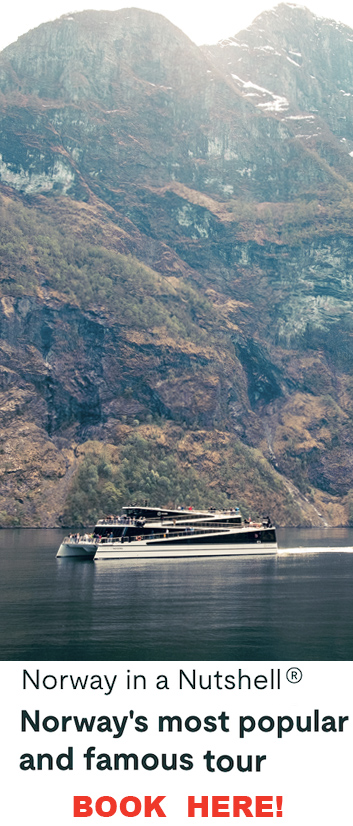
- The Norway in a Nutshell & Sognefjord in a Nutshell self-guided tours (certain departures sell out in summer season!).
–> Find and book all the Nutshell-tours on the Fjord Tours Website
3. Safety and Pickpockets
So what about safety? Fortunately, with one of the lowest crime rates in the world, Oslo is a very safe place to visit, even for solo travelers and female travelers. But like for any major city in Europe you should be aware of pickpockets.
I don’t think us locals go around thinking much about crime. But when you’re out traveling you don’t want to have your vacation spoiled because you lost your passport, cash or your credit cards.
As Rick Steves say: “don’t be paranoid, be prepared“. Keep valuables in your front pocket and not your back, especially phones and wallets. Or maybe better, wear a money belt where you can keep your passport, an extra card and so on. Also avoid having any valuables in your backpack or purse. The valuable stuff goes “on your body”!
You can of course also leave your passport and other valuables in the safety deposit box in the hotel, in case you don’t want to carry them around, so then just make a copy of the passport bring that with you.
Essential products for keeping your valuables safe in Oslo:
- Money belt
- Neck wallet
- Cell phone lanyard (to keep anyone for running away with your phone)
- Card holder (for your front pocket, keep 1-2 cards, rest in your money belt)
- Personal alarm (for self-defense)
- Cable luggage locks (keep luggage from being moved)
- Apple AirTag (I use these to track my luggage)
- Hidden Camera detector
4. Language: Norwegian and English
Will Norwegians understand English? You absolutely do not need to learn Norwegian in order to travel to Norway. English is widely spoken and understood. But isn’t it fun to order a kaffe og kanelbolle instead of a coffee and cinnamon bun, if you can?
Most Norwegians speak English, and especially in the cities, their English proficiency is excellent. However, like in any culture, Norwegians appreciate visitors who make an effort to speak the local language, which can open doors to experiences or connections you might otherwise miss.
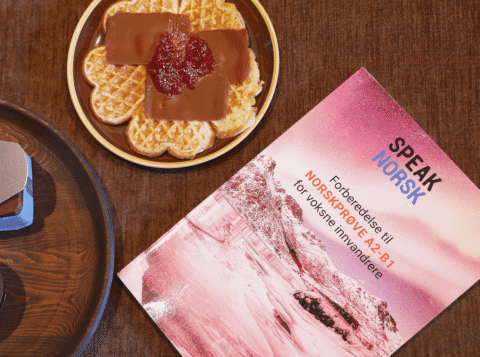
If you are a serious about learning Norwegian I recommend checking out the language school Speak Norsk.
On the website of Speak Norsk you can find:
- A free course available covering some of the basics
- listening exercises for beginners, common expressions, and pre-recorded video lessons.
- A downloadable guide “Hvordan introdusere seg på norsk”.
- How to introduce yourself in Norwegian with English translations.
- A free e-book with essential words and phrases in Norwegian.
- Teaching you common greetings, numbers, days of the week, common verbs, adverbs and adjectives and more.
Speak Norsk also offer Norwegian courses both in person and online. And to be honest, I think these are some of the best courses on the market.
–> Sign up for a Norwegian course here!
Speak Norsk – Norwegian courses
5: Eating Times and food
Norwegians are breakfast people, so you can expect a pretty big breakfast table at hotels. this is great for getting a good start on the day, and if you are traveling on a budget, breakfast might be your biggest meal of the day.
On the breakfast table you can expect:
- Bread, a lot of bread
- Different spreads like the iconic Norwegian brown cheese (brunost).
- liver pate (leverpostei),
- ham (skinke),
- cheese (ost),
- jam (syltetøy),
- salmon (laks),
- hard boiled eggs (hardkokte egg),
- milk, fruit juice, coffee tea (melk, juice, kaffe, te),
- pastry (bakevarer),
- and more!
Coffee drinking in Oslo
With the second-highest coffee consumption per capita, Norwegians are big coffee drinkers, and you find coffee shops all over town. You can get basically any type of coffee here, even in hotels they’ll often have good drip coffee and an espresso machine.
You’ll notice a lot of Espresso House coffee shops, these are the Scandinavian version of Starbucks.
My favorite coffee shops in Oslo:
- Kaffebrenneriet (chain all over town)
- Fuglen Coffee Roasters
- Tim Wendelbo
Lunch in Oslo
Lunch is typical eaten between 11:30 and 13:00, and is not really a big meal here, as it is in many other European countries. Most Norwegians do with some more bread, or a salad, a sandwich, and typically we like to have coffee and some sweet pastry.
There are bakeries all over town in Oslo where you can find delicious Norwegian sweet buns and cakes.You could also just do a waffle, or a hot dog for lunch. There are hot dog kiosks everywhere, some more modern while others a bit more traditional.
Dinner in Oslo
Dinner is not particularly late, and you can find people starting to eat dinner already 5:30 in restaurants, but they’ll serve dinner until late, so no worries, you really have a lot of flexibility here, but I’d say prime time at a restaurant goes from around 6:30-8:30.
–> See my Oslo Travel Guide for eating recommendations.

Norwegian stew with lamb’s meat
6: How to tip in Norway?
I’ve covered eating in Oslo Norway, but what about tipping?
Norway is not a tipping country. Meaning, when you are in Oslo you don’t tip at cafés, and at a restaurant, you would normally tip between 5-10%, but never more than that. You can usually tip when you pay with a card, just enter a higher “total sum” to include the tip.
In general, our attitude to tipping is that we tip when we are happy with the food and service. If we are not, we tip less or not at all. Most waiters are paid fair wages and are not dependent on tips.
But one of the things that I always say is that if you did like the service, you should definitely leave something. So at a restaurant, let’s say you round up the bill or even leave 10% if you were super happy with everything.
Taxis or other services might have their own rules as well. But personally I rarely tip in a taxi, they are already quite expensive. It’s up to your own discretion and how much you feel comfortable leaving. But remember, always tip your tour guides if you were happy with the tour.
7: Money: Cash vs. Cards & Currency
Norway is becoming a cashless society, meaning you can pay with a credit or debit card pretty much everywhere in Oslo. However, all businesses are required to accept cash, so if that is your preference you can use that. If you do withdraw cash, there are plenty of ATM’s and places to exchange money.
Most common accepted forms of payment
- MasterCard and Visa card
- American Express
- ApplePay and Google Pay
Note! Norwegians have their own payment system named Vipps (similar to venmo and PayPal), but it is not intended for non-Norwegians and non-residents.
So, my advice would be to bring at least two cards, so that if one is not working, the other one will. And do some research in advance with your local bank, to make sure that they will work here. If you are confident your cards will work, then I’d say you don’t have to bring cash.
The last thing that you want to keep in mind, is that on the card terminal, when they give you the option to pay in kroner or your own currency, you’re always going to want to go with kroner. It’s going to save you money in the long run with better conversions fees etc.
8. Getting Around Oslo (Transportation)
To get around in Oslo, I recommend walking because I think that is a great way to get to know the city, and Oslo is very walkable. There’s a lot of pedestrianized streets, traffic is limited downtown, and most of the downtown area is quite flat, although the city is surrounded by hills, so once you’re out of the downtown area you can expect it to become more hilly.
For instance, you can basically walk all the way from the east side and the neighborhood of Grünerløkka, and straight through the entire city to the west side of Oslo and the Vigeland park in just about 1 hour. So, bring good shoes and walk all over Oslo!
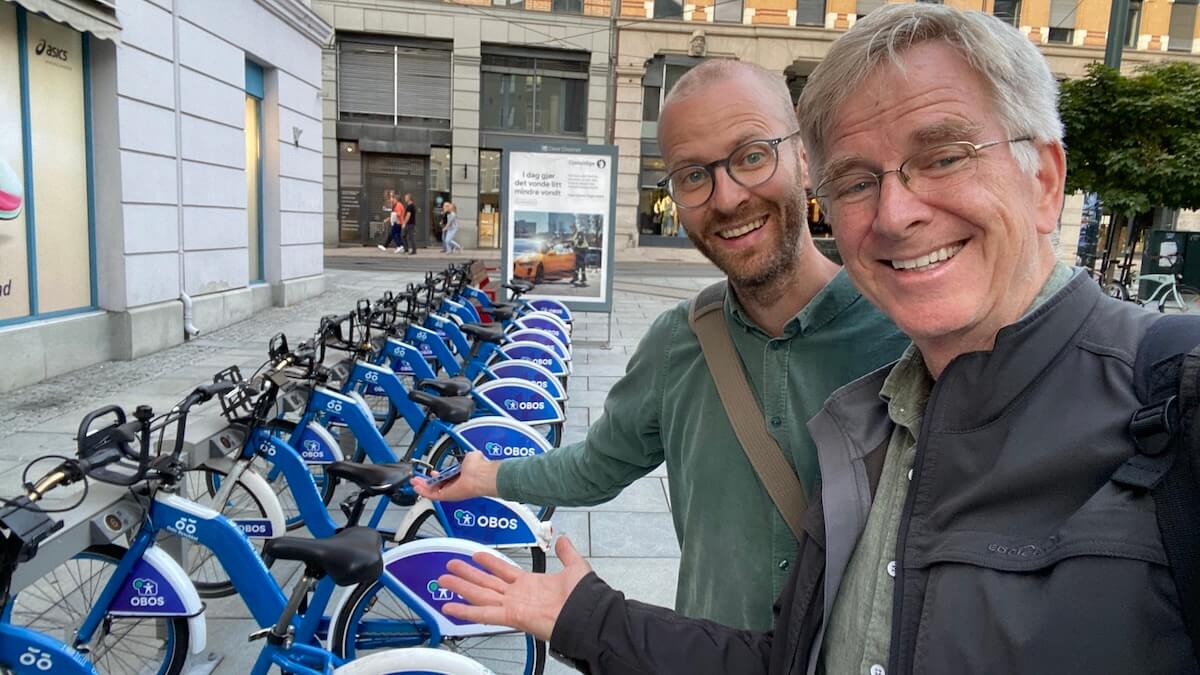
If you want to shorten down walk time you can hop on a city bike. There are Oslo City bikes parked all over town, and when Rick Steves visited in Oslo, I spent a full day with him (watch the YouTube episode), and we used them to ride everywhere.
There are a lot of bike lanes, but note that these bikes don’t come with a helmet. So if you want that, either bring one from home if you plan on a lot of biking or you can also go on a guided bike tour.
There is also great public transportation in Oslo. The city is well connected with buses, metros, trams, ferries, and it’s all on the same ticket within the same zone, zone 1.
You can buy tickets for public transportation here:
- A local kiosk (Narvesen, 7-11, Deli de Luca)
- At the station (only the train & metro)
- The Ruter app
- Single tickets, 24 hours tickets, 7 days tickets, etc.
- Also route planning in the app
- You need to have data on your phone
Note: Kids and Seniors get a discount! Also, be aware that if you are a group of people, and all want a multi-ride ticket, you each need your own phone. You can’t buy for instance 3 24 hours ticket in the app. Then ‘you need three different phones. If you’re only doing 2-3 rides a day, buying a single ticket is just as cost-effective.
Taxis in Oslo
The more expensive option for getting around are taxis. There are taxi stops close to main stations, but you can also use Uber or Bolt in Oslo, although often a regular taxi will show up anyways. Note that taxis are not cheap here, so more for the convenience and saving time.

View from Drøbak Village
9: Day Trips from Oslo
There’s a lot to see and do in Oslo, and I would recommend two full days here. But if you have more time, you could consider a day trip. What you’d have to decide is if you want to be close to the fjord, or if you want to venture into the countryside.
Drøbak Village by the Oslo Fjord
One option is to hop on a fjord ferry and ride it for about 1 hour south to the fjord village of Drøbak. This is a super cute town, with white wooden houses, charming streets, small shops and a maritime vibe. There is also a small ferry that can take you to and from the Oscarsborg Fortress, where you can visit a ww2 museum to learn about the battle of the drøbak sound, and you’ll also get amazing views of the Oslo fjord.
To get back to Oslo again hop on the same ferry, or to change it up, take bus #500 for about 50 minutes to the Oslo bus terminal.
Lillehammer Village north of Oslo
Another option for a daytrip, 2 hours north of Oslo, is to go to Lillehammer. You might recognize this name, as the town hosted the 1994 Winter Olympics. You can easily get there on a train departing every hour from the Oslo Central Station. It’s an enjoyable train ride, you’ll get to see plenty of the countryside. Once in Lillehammer you can visit the popular Maihaugen Open Air Folk Museum, the Lysgårdsbakkene Ski Jumps and stroll around in the Lillehammer downtown checking out cute little shops and cafés.
In the afternoon you’ll ride the same train back to Oslo. You can buy the train tickets at the station, or in the VY app, or through the VY website.
Watch my YouTube-episode Things to know before you go – Oslo, where you can see some images from both Drøbak and Lillehammer.
10: Packing for Oslo
Norwegians are quite casual but like to dress up a bit when they go out for dinners, to bars and so on.
It can be a good idea to bring
- A nice pant, and a nice sweater
- A button down shirt
- A nice dress if you are a woman.

But to be honest, you can get away with most things these days, but if you want to blend in, I’d say its better to be a bit overdressed, than underdressed.
About weather in Oslo
In general there’s only one thing to say, it’s unpredictable. That means you want to come prepared for different kinds of weather types, and potentially fours seasons in one day.
When considering what clothing to bring, you might wonder if Oslo is extremely cold in the winter? Well not really, it has a coastal climate, but there can be a lot of wind chill, bringing the temperatures down.
Make sure to bring:
- Rainproof jacket and pants,
- Layers (for the cold season),
- Shorts and tshirts for hot summer days
- Swimming gear for jumping into the Oslo fjord.
I recommend checking out my Complete Norway Packing List.
May the weather be with you!
Traveling to Oslo?
Alright, that’s all the advice I have for now. If you need some ideas for things to do in Oslo check out my two Hidden Gems episodes:
How I can help you experience Oslo and Norway?
- I’m a local guide in Oslo, and I’d love to show you around
- I can also help you with planning your next Norway adventure.
- Check out my Small Group Norway Tour
If you enjoyed this article and want more Norway with Pål, consider supporting me on Patreon.
I hope to see you in Oslo! Ha det bra!
Your friend in Norway,
Pål

DISCLAIMER: Products on this page may contain affiliate links, and I might make a small sum per purchase. For you this does not affect the product price, but supports me and my work, and makes me able to continue sharing my passion for Norway with you. Read the Disclaimer policy. Thank you, tusen takk!
1 Comment
Leave a Comment
Join the Newsletter

Get my digital recipe book with seven traditional and tasty Norwegian delights!
Looking for something?
Join on Patreon

Become a part of the virtual viking Norway With Pål family, support, and get exclusive content and perks!
Donate on Paypal

Your support helps me to continue sharing my passion for Norway with you.
Tusen takk! Thank you!

I tried to nab it but got salad all over it.